India’s aviation sector has been thrown into chaos this week as IndiGo, the country’s largest airline by market share, cancelled and delayed hundreds of flights nationwide, leaving thousands of passengers stranded. What began as scattered disruptions quickly escalated into one of the airline’s worst operational crises in years.
A Sudden Spike in Cancellations
Over several days, IndiGo cancelled more than 500 flights in a single day, triggering massive queues, missed connections, and airport congestion across major hubs like Delhi, Mumbai, Bengaluru, and Hyderabad. The airline’s on-time performance dipped to 8.5%, an unprecedented low that shocked both passengers and industry observers.
At several airports, domestic departures were halted temporarily because IndiGo did not have enough crew to operate scheduled flights.
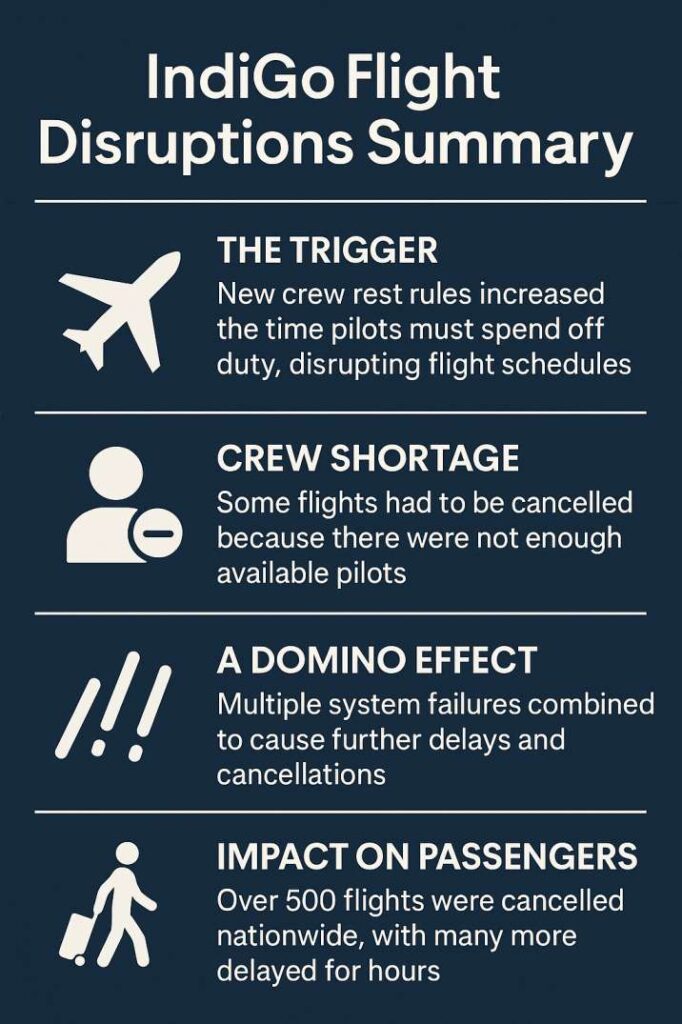
The Root Cause: New Crew-Rest Rules and Pilot Shortage
According to aviation authorities and IndiGo’s own admission, the crisis stems mainly from the implementation of the new Flight Duty Time Limitation (FDTL) rules, which strengthen rest requirements and limit the number of night landings that pilots can perform.
Under these updated rules:
- Pilots must get longer weekly rest periods.
- Restrictions on night-time flying have increased.
- Crew rosters that were previously sustainable became non-compliant overnight.
The result was a severe pilot and cabin-crew shortage, as IndiGo had not planned enough buffer staffing to adapt to the new regulations. The Directorate General of Civil Aviation (DGCA) highlighted a “misjudgment and planning gap” in crew rostering.

Technical Issues Added Fuel to the Fire
Compounding the manpower shortage, IndiGo also faced:
- An emergency software update required for its Airbus A320 fleet, which further disrupted crew planning and aircraft rotation.
- Winter schedule changes and seasonal fog-related congestion in northern India.
- Air-traffic restrictions and operational bottlenecks at major airports.
Together, these issues triggered a domino effect, causing cascading delays across the network. Once the roster collapsed, flights in later sectors also got cancelled, overwhelming IndiGo’s recovery operations.
Passengers Left Stranded
The impact on travellers has been severe. Thousands waited for hours in terminals with:
- No clarity on departure times
- Luggage delays
- Last-minute cancellations
- Limited access to food or assistance
Passengers at several airports reported confusion and lack of communication as IndiGo struggled to cope with the sudden breakdown in operations.
IndiGo Responds — But Turbulence Isn’t Over Yet
IndiGo has apologised for the chaos and stated that it is working to stabilise operations. The airline will also temporarily reduce its scheduled flights from December 8 to ensure adequate crew availability.
The Indian aviation regulator has stepped in, closely monitoring the situation. The government has also granted IndiGo a one-time exemption from certain pilot night-duty rules to hasten the return to normalcy.
However, experts say full restoration of IndiGo’s network may take days — if not weeks — as the airline recalibrates pilot rosters, manages aircraft rotations, and absorbs the backlog of disrupted flights.
What This Means for Air Travel
The IndiGo meltdown has highlighted deeper issues within Indian aviation:
- Airlines operate with tight crew margins, leaving little room for regulatory change.
- Rapid expansion has outpaced training and manpower development.
- Technical dependencies can destabilise entire fleets.
For now, passengers are advised to check flight status frequently and expect delays through the coming week.
- IndiGo Flight Chaos Today: Why Flights Are Being Cancelled and What Passengers Should Know
- Meesho IPO on Fire! Early Subscription Soars as GMP Hits 40%+
- Cloudflare Outage Triggers Global Internet Blackout, Crippling X, ChatGPT, and Spotify
- Red Fort Blast in Delhi: 8 Dead, Several Injured as Explosion Rocks Historic Lal Quila Area
- ChatGPT Atlas Is Here: OpenAI’s New AI Browser That Could Replace Google Search